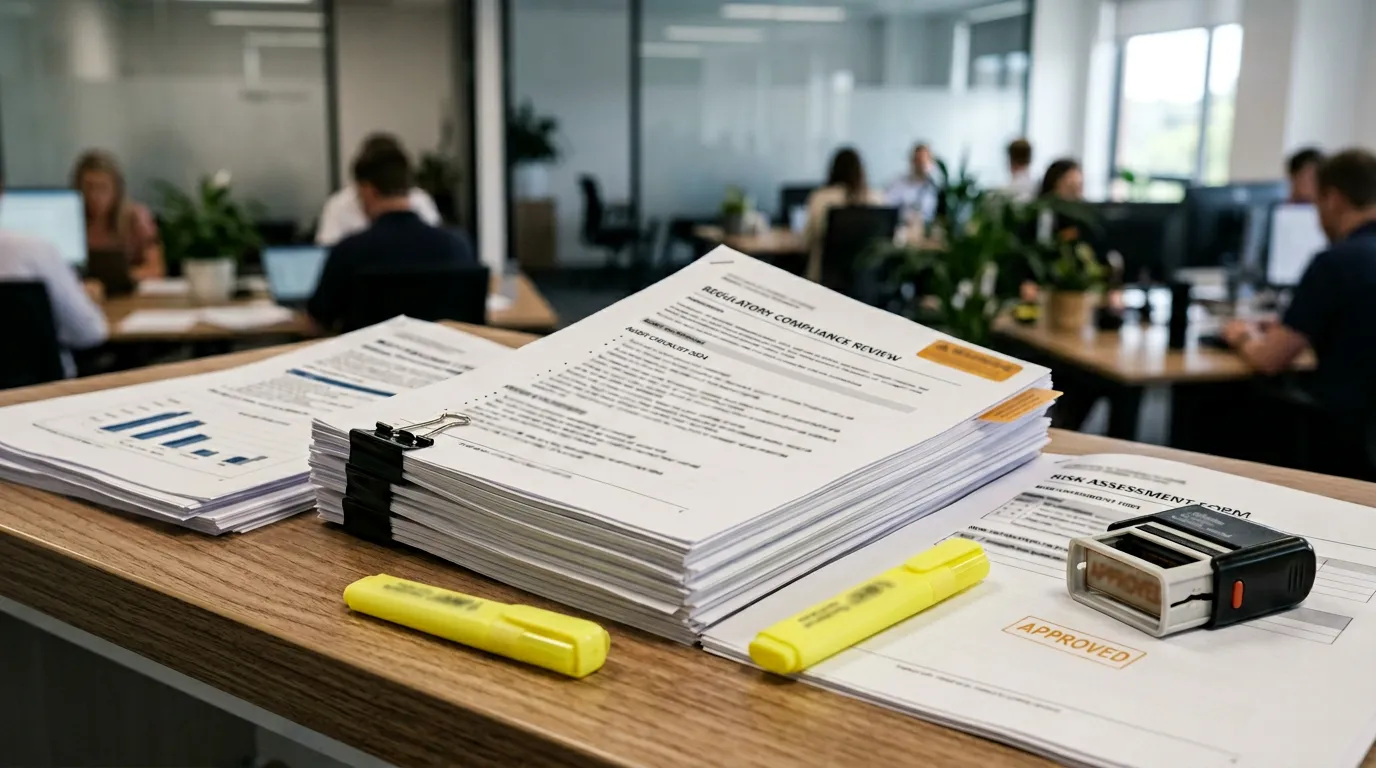
It usually starts on a Tuesday. A violation notice arrives from the city — sometimes by mail, sometimes by email, sometimes taped to the door by an inspector who stopped by while you were at another property.
You have 10 days to respond in writing. The response needs to acknowledge the specific violation, describe corrective action, include a completion timeline, and go through the right channel (which varies by CT municipality).
If you manage 3 units, this is annoying. If you manage 15 units across multiple CT towns, this is a workflow problem — because it will happen again, and the next one might arrive the same week as an inspection at a different property.
The Documentation Problem Behind Every Violation Response
The reason violation responses take so long isn't that the work is complicated. It's that the documentation is never where you need it when you need it.
To write a proper response, you need:
- The specific code section cited in the violation
- Evidence of what repairs were made (and when)
- Any prior inspection records for the property
- The tenant's current lease status and contact history
- The right submission format for that specific municipality
For most independent CT property managers, this information is scattered across email threads, a folder on a desktop, a text thread with a contractor, and a spreadsheet that hasn't been updated since last quarter.
Pulling it together for one violation response takes 2–4 hours. If you have two active violations at the same time — which happens — that's a full day of admin work that wasn't on your calendar.
What CT Inspectors Actually Look For
Municipal housing inspections in Connecticut follow predictable patterns. Inspectors commonly request documentation in four categories:
Habitability and safety: Working smoke detectors, CO detectors (required in all CT rental units since 2011), functional heat (minimum 65°F from October 1 through May 1 per CT statute), no water intrusion.
Lead and environmental: Lead paint disclosure signed by current tenants for pre-1978 properties. If the property has had any lead-related remediation, the clearance report needs to be on file and accessible.
Tenant documentation: Current lease, security deposit accounting records, any notices served (entry notices, lease violation notices, non-renewal notices). CT has specific format requirements for these.
Permit and repair history: Any open permits and their status. Records of repairs made in response to prior violations. This is the one that catches property managers off guard — if a previous owner pulled a permit that was never closed, it shows up in the town's system.
If you have all of this organized and accessible, an inspection takes an hour. If you're assembling it the night before, it takes five hours and you still might miss something.
The Compounding Problem Across Multiple Properties
One property is manageable. The moment you're managing five or more — especially across different CT towns with different inspection cycles — the workflow breaks down.
Hartford, New Haven, Bridgeport, Stamford, and smaller municipalities each have different:
- Inspection frequencies for residential rentals
- Violation notice formats and response channels
- Specific code requirements (some are more stringent than state minimums)
- Online vs. mail-in submission requirements
Tracking compliance status across multiple properties in multiple towns, each with its own schedule and format, is a full-time administrative job — which most independent property managers don't have staff for.
How AI Reporting Changes the Time Equation
The shift AI-assisted tools make isn't magic — it's structure. When you have a tool that:
- Takes your property information as input
- Generates a pre-inspection documentation checklist aligned to CT requirements
- Produces a structured first draft of a violation response from the facts you provide
- Creates a monthly compliance status summary across your entire portfolio
...the 2–4 hour violation response becomes a 20-minute review. The "night before" inspection scramble becomes a 30-minute document pull.
You still review everything. You still decide what goes to the city. The tool handles the assembly so you're validating a structured draft instead of writing from a blank page.
What to Do Before the Next Notice Arrives
Don't wait for the violation. Here's what to do this week:
For each property you manage, confirm you have on file:
- Current signed lead paint disclosure (if pre-1978)
- CO detector installation date or inspection record
- Last fire safety inspection report
- Any open permits and their status
- Current tenant lease and move-in/move-out condition report
If any of those are missing or you're not sure, that's your first compliance gap — and the easiest kind to fix before an inspector finds it.
TechEd Analyst generates CT-specific property management compliance reports and violation response drafts in minutes. If you're managing more than 5 units in Connecticut, it's worth 20 minutes to see if the tool fits your workflow.